Technology · 约800 – present
Gunpowder
火药
Origin: Tang China — Taoist alchemical practice ·
Summary
Gunpowder is the earliest known chemical explosive: a mixture of sulfur, charcoal and potassium nitrate in which the saltpeter supplies its own oxidizer. It began as Taoist medicine — Chinese alchemists seeking an elixir of life heated sulfur, realgar and saltpeter with honey, and burned their hands and houses. The first confirmed formula appears in a Tang text of 808; by the eleventh century the Song military compendium Wujing Zongyao recorded mixtures still too weak to explode, while fire arrows were already burning on the northern frontier. Chinese soldiers then weaponized the mixture through a ladder of devices — bombs, fire lances, eruptors — until, by the late thirteenth century, metal-barrelled hand cannons were true guns. Carried westward along the Mongol conquests, it reached the Islamic world, where Hasan al-Rammah wrote down recipes and called saltpeter 'Chinese snow', and Europe, where corning turned powder into a reliable propellant. Cannon reshaped fortresses and states; the Ottoman empire built a nitre-supply machine on it; Lavoisier's Gunpowder Administration made French powder the world's best. Smokeless powder ended its military career, but fireworks still keep the oldest explosive burning.
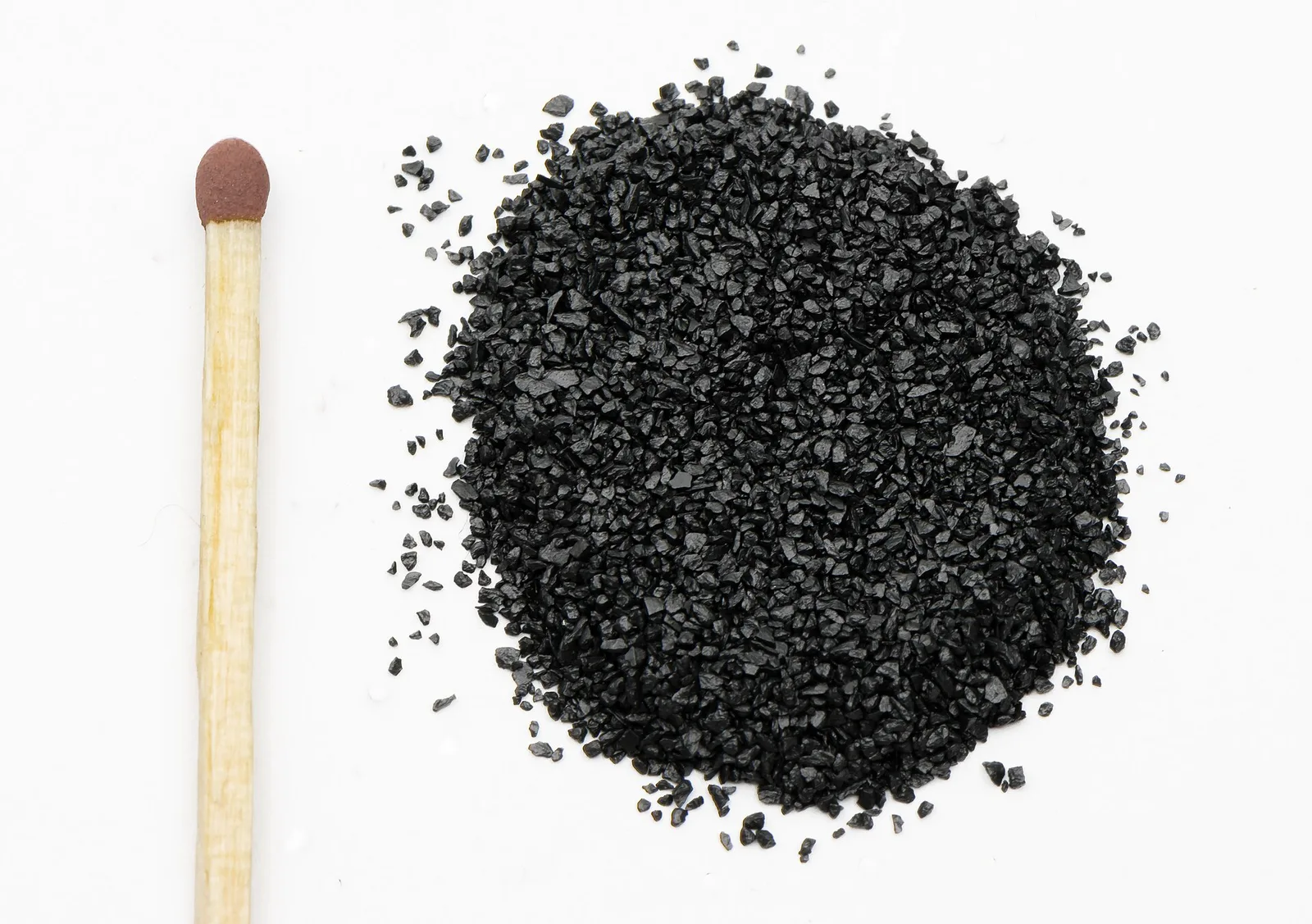
Key facts
- Chemistry: sulfur and charcoal are the fuels and saltpeter the oxidizer — carrying its own oxygen is why it burns even inside a closed barrel.
- Class: it is a low explosive that deflagrates rather than detonates, which makes it a good propellant and a poor shattering charge.
- Housekeeping: its residue is hygroscopic alkali that corrodes iron barrels, so black-powder arms need constant cleaning.
- Name: its Chinese name huoyao means 'fire drug' — a record of its birth as an elixir experiment rather than a weapon.
In depth
Origins and preconditions
Gunpowder was discovered by people who wanted to live forever. Tang Taoists experimenting toward an elixir of life combined sulfur, realgar and saltpeter with honey — the Zhenyuan miaodao yaolüe records that smoke and flames resulted, burning hands and faces and even whole houses. A formula of six parts sulfur to six parts saltpeter to one part birthwort appears in a text dated 808, the first confirmed reference. Alchemists could already work with saltpeter: a fourth-century Chinese text notes its purple flame, a practical test that let them distinguish and purify it — the earliest Latin accounts of saltpeter purification come only after 1200. The compound's Chinese name, huoyao, 'fire drug', preserves this origin; the weapon came later, first recorded in 904 as incendiary projectiles.
Gunpowder's birthplace is alchemy, and its first problem was purity. Saltpeter — potassium nitrate — had to be recognized, refined and kept dry; the Chinese purple-flame test and the later European clarification with wood ash and blood were attempts to turn a common but contaminated salt into a reliable oxidizer. The earliest recipes are medicinal and pyrotechnic, not military: a fire drug that could cure or burn. Only when the mixture was confined in a tube did it become a propellant, and only when states could supply saltpeter in quantity did it become an artillery system.
How it worked
The chemistry is a triangle: sulfur and charcoal are the fuels, potassium nitrate the oxidizer. Because the oxidizer is built in, gunpowder burns even where air cannot reach — which is exactly what a propellant needs and a demolition charge does not. It deflagrates at subsonic speed rather than detonating; confined behind a shot it drives the projectile out of the barrel without usually rupturing it. The art lay in purity and preparation. Saltpeter had to be refined — Chinese alchemists used the purple-flame test; European makers later clarified dung-liquor nitre with wood ashes, ox blood, alum and turnip slices. Corning, the late fourteenth-century practice of drying powder into grains, fixed combustion consistency. Even al-Rammah's medieval rocket recipes — a median near 75% nitrate, 9% sulfur, 16% charcoal — sit almost exactly on the modern ideal proportions. The same chemistry has a price: less than half the mass converts to gas, the rest fouls barrels and air alike, and its hygroscopic alkali residue corrodes iron unless arms are cleaned relentlessly.
Black powder is a mechanical mixture, not a compound, and its performance depends on how finely and evenly the three ingredients are combined. Milling, pressing into cakes, corning into grains and glazing control the burning surface; a fine powder burns fast and risks bursting the barrel, a coarse one burns slowly and wastes energy. The reaction produces gas and heat but also smoke and corrosive residue, which is why early firearms needed constant cleaning and why smokeless powder — nitrocellulose — replaced black powder for military use in the late nineteenth century. The chemistry did not change; the control of its surface did.
Diffusion
Gunpowder crossed Eurasia faster than almost any other Chinese invention — faster, historians note, than paper, the compass or printing. The Mongols used gunpowder weapons against the Jin, the Song and in the invasions of Japan, and are credited by scholars such as Iqtidar Alam Khan with carrying it to Persia and Mesopotamia; Muslims acquired the knowledge sometime between 1240 and 1280, and saltpeter's foreign names — 'Chinese snow', 'Chinese salt' — still point east. In India the Delhi Sultanate staged fireworks for Hulegu's envoy in 1258, and Mysore's rockets later inspired the British Congreve. Europe's earliest Western accounts run through Roger Bacon in 1267; a recipe book circulates as the Liber Ignium; the Tower of London makes powder by 1346; and the transmission debate — Mohi's 'long lance' among the evidence — is now resolved in one direction: as Tonio Andrade puts it, scholars overwhelmingly concur that the gun was invented in China.
Gunpowder moved west faster than paper or printing, carried by the Mongol conquests and the trade that followed. Islamic chemists refined saltpeter and wrote recipes; the Mamluks used cannon against the Mongols; Europe's earliest surviving cannon appear in the fourteenth century, and the technology spread with the gunpowder empires — Ottoman, Safavid and Mughal — that organized nitre supply and foundries. In China, the fire lance and the hand cannon evolved into artillery, but the military revolution that made fortifications obsolete happened fastest in Europe, where competing states invested in metallurgy, ballistics and disciplined infantry.
Impact and legacy
Gunpowder rewired power. In China the fire lance became the hand cannon and the cannon; in the Islamic world and Europe it put walls at the mercy of artillery and made siege warfare a contest of money and manufacture. States organized around it: the Ottoman empire built supply chains for nitre, sulfur and Anatolian oak charcoal that underwrote its expansion between the fifteenth and eighteenth centuries; France, starved of British-controlled saltpeter, put Lavoisier at the head of a Gunpowder Administration that reformed refining, accounting and pricing — by 1788 French powder was the best in the world, and a chief beneficiary was the American Revolution. The compound's slow decline is written in replacements: smokeless powder took the battlefield, dynamite took the quarry. What remains is celebration — lifting shells, rockets and flash — and, in the histories of empires, the proof that a drug meant for immortality decided the fate of fortresses.
Gunpowder's impact was to make fortification expensive and the state strong. Tall stone walls gave way to low, thick, angled bastions; siegecraft became a budget line; and the states that could tax, buy nitre and cast cannon grew at the expense of those that could not. The gunpowder empires are the textbook case, but the same logic ran from Ming China to Bourbon France. Industrially, gunpowder was the first chemical explosive, and its manufacture — refining, milling, corning, proofing — became a model for later chemical industries. Its military decline came with smokeless powder and high explosives, but its cultural life continues in fireworks and in the vocabulary of 'powder keg' politics.
Timeline
Dates are century precision; years are century starts.
- 800–1044
Fire drug and fire arrows
Elixir experiments yield a scorching mixture. Saltpeter's purple-flame test lets alchemists purify it reliably; the mixture is first recorded in war as incendiary projectiles.
- 808First confirmed gunpowder formula in a Tang alchemical text
- 1044–1280
From fire lance to true gun
Song engineers climb a ladder of devices: fire arrows by the hundred thousand, fire lances at siege works, iron-cased Jin bombs, then metal-barrelled eruptors that fire true projectiles.
- 1044Wujing Zongyao records the first chemical formula
- 1280–1700
Gunpowder empires
Mongol conquests carry the technology west; al-Rammah writes the Islamic recipes; Europe corns its powder and English mills supply the crown; Ottoman state manufacture underwrites expansion.
- 1280al-Rammah's recipes spread through the Islamic world
- 1346The Tower of London manufactures gunpowder for the crown
- 1700–1788
Science and the saltpeter state
France industrializes saltpeter supply under Lavoisier's administration, and its mills turn out the world's best and cheapest powder — some of it sold on to the American Revolution.
- 1788French mills turn out the world's best powder under Lavoisier's administration
The last phase ends at its data cut-off; the entity window remains open to the present.
Connections
Used by
Showing the 10 earliest adopters by the adopter's start date (of 25).
Related technologies
Related entries chosen for this kind of subject — shared context, place or period.
Sources
- Gunpowder — Encyclopaedia BritannicaAttribution
- GunpowderWikipedia (EN)CC-BY-SA-4.0
- History of gunpowderWikipedia (EN)CC-BY-SA-4.0
- Wikidata Q12861 — GunpowderWikidata · structured dataCC0-1.0
Reuse this data: open dataset (GeoJSON / CSV, CC BY 4.0)