Technology · 1903 – present
Airplane
飞机
Origin: Kitty Hawk, North Carolina (the Wright Flyer) ·
Summary
The airplane is a fixed-wing aircraft driven forward by thrust from an engine — propeller, jet or rocket — held aloft by air moving over its wings. Otto Lilienthal's glider flights in the 1890s are seen as the beginning of fixed-wing flight; in 1903 the Wright brothers solved the remaining problem with control and power, inventing and flying the Wright Flyer. Within a generation airplanes carried mail and passengers; within two they carried bombs and airliners. Commercial aviation today transports more than four billion passengers annually and hundreds of billions of tonne-kilometers of cargo — under one percent of world cargo by volume, but the fastest of any mode. The airplane shrank the planet: ocean crossings fell from weeks to hours, tourism globalized, wars became continental within a day, and remote cities joined the same economic map. Most airplanes are flown by pilots on board; drones and computer-controlled flight now extend the idea — and the jet engine, itself a descendant of internal combustion, made the modern airliner possible.
Key facts
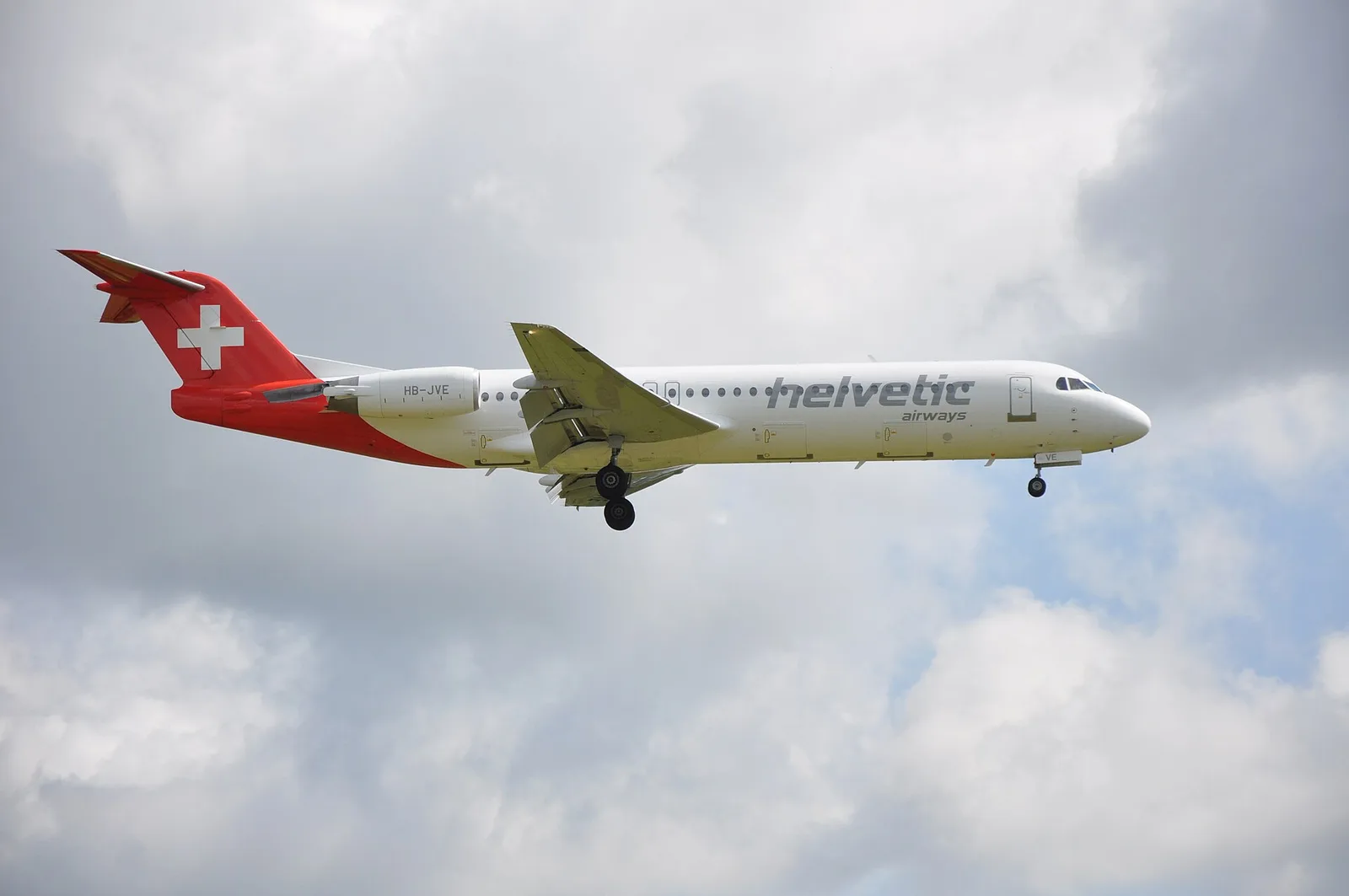
- Configuration: airplanes come in many sizes, shapes and wing layouts, but all are fixed-wing aircraft driven by thrust.
- Scale today: commercial aviation carries over four billion passengers a year and more than 200 billion tonne-kilometers of cargo.
- Cargo share: air freight is under one percent of world cargo movement — priced for speed, not bulk.
- Pilots: most airplanes are flown by pilots on board, but drones and remotely or computer-controlled aircraft extend the category.
In depth
Origins and preconditions
Flight's problem was never lift alone — gliders had proven wings work. Otto Lilienthal's controlled glider flights in the 1890s are seen as the beginning of fixed-wing flight, and they taught the Wright brothers the importance of balance. What powered flight required was the union of three problems: aerodynamics, lightweight power and, above all, control — the Wrights' decisive contribution was three-axis control, letting a machine bank, pitch and yaw deliberately rather than ride the air like a boat. With that insight and a light engine from their bicycle workshop, they invented and flew the Wright Flyer in 1903. Its first flights were short hops by today's standards, but they settled the question: a machine heavier than air, carrying its own engine, could be flown on purpose, and landed safely.
The airplane's prehistory is a sequence of partial solutions: kites proved lift, gliders proved control, and engines proved that power could be carried aloft. Lilienthal's death in 1896 showed how fragile the control problem was; the Wrights' answer was not a bigger engine but a system — three-axis control, a light engine, a propeller designed by wind tunnel, and a pilot trained to use all three together. Their 1903 flights were short, but they settled the question that had defeated earlier experimenters: a heavier-than-air machine could be controlled in three dimensions, not merely launched.
How it worked
An airplane flies on four forces in balance: lift from the wings, weight pulling down, thrust pushing forward, drag pulling back. The wing makes lift by shaping airflow — faster air over the curved upper surface means lower pressure — and the pilot trades angle of attack against speed. Thrust comes from the engine: early aircraft used piston engines turning propellers, an internal-combustion lineage; jet engines — the continuous-combustion branch — expelled exhaust fast enough to power long-haul flight, which is why the jet airliner remade the industry. Control surfaces — ailerons, elevators, rudder — translate the pilot's commands into roll, pitch and yaw, the inheritance of the Wrights' insight. The rest of the machine exists to manage those four forces cheaply: structures light enough to carry payload, fuel systems sized to range, and landing gear to survive the ground.
An airplane is a balance of four forces: lift from the wing, weight from gravity, thrust from the engine, drag from the air. The wing generates lift by accelerating air over its upper surface, lowering pressure; the pilot trades angle of attack for speed, and the control surfaces — ailerons, elevator, rudder — turn intentions into roll, pitch and yaw. Stability is a design choice: a stable aircraft resists disturbance but is harder to maneuver, a fighter is deliberately unstable. Propulsion evolved from pistons and propellers to jets, and materials from wood and fabric to aluminum and composites, but the four-force balance has not changed since 1903.
Diffusion
Aviation's spread ran through two accelerations. The First World War industrialized aircraft production, engines and pilot training; the interwar years converted that capacity into scheduled air mail and passenger routes, first over short European hops, then intercontinental — by 1939 ocean-crossing passenger service had shrunk the Atlantic from weeks to hours. The jet engine delivered the second acceleration: postwar airliners made long-haul travel cheap enough for mass tourism and global business, and hub-and-spoke networks knotted cities together. Air freight carved out its own market — small by volume, decisive by speed, under one percent of world cargo movement but moving the shipments that cannot wait.
Aviation spread through two accelerations. The First World War industrialized aircraft production, engines and pilot training; the interwar years converted that capacity into airmail and passenger routes, first short-haul over Europe, then transcontinental. The jet engine delivered the second acceleration: postwar airliners made long-haul travel cheap enough for mass tourism and global business, and hub-and-spoke networks knitted cities together. Air freight found its niche — small by volume, decisive by speed — and military aviation remained the technology's leading edge, from strategic bombing to stealth and drones.
Impact and legacy
The airplane is the fastest large-scale transport humans have built, and its impact is measured in the geometry of the world: continents joined by hours instead of weeks, migration and tourism globalized, perishable goods and urgent parts moving on schedule, diplomacy and warfare compressed into same-day reach. Commercial aviation now transports more than four billion passengers annually — an industry of hubs, freighters and low-cost carriers reshaped by economics as much as aerodynamics. Its costs are the mirror of its powers: fuel, emissions and noise, plus the vulnerability of cities to air attack — a lesson the twentieth century taught expensively. Most airplanes still carry pilots, but the frontier has moved to autonomy, where drones extend the airplane's logic to machines that never need a cockpit at all.
The airplane compressed geography. Continents became hours instead of weeks; migration, tourism, perishable trade and emergency aid all reorganized around the timetable; diplomacy and war acquired same-day reach. Commercial aviation now carries billions of passengers a year and is a major source of emissions, which is why efficiency, sustainable fuels and electric short-haul aircraft are active research fronts. Its military and surveillance roles remain central, and drones have extended the airplane's logic to machines without cockpits. The Wrights' question — can a machine be controlled in the air? — has become a question about how much of the world should be flown over.
Timeline
- 1903–1919
Gliders to powered control
Lilienthal's gliders taught balance; the Wrights added power and three-axis control; wartime accelerated engines, structures and pilots.
- 1903The Wright Flyer flies at Kitty Hawk
- 1919–1960
Airlines and oceans
Scheduled mail and passenger services grow into intercontinental routes; flying boats give way to land planes; the piston airliner peaks.
- 1919Scheduled air mail and passenger services open
- 1939Transatlantic passenger service begins
- 1960–2000
The jet mass market
Jet engines make long-haul cheap; four billion annual passengers become possible; hubs, freighters and low-cost carriers reshape the map.
- 1960Jet airliners carry the mass travel market
- 2000Commercial aviation passes billions of passengers a year
The last phase ends at its data cut-off; the entity window remains open to the present.
Connections
Related technologies
Related entries chosen for this kind of subject — shared context, place or period.
Sources
- Airplane — Encyclopaedia BritannicaAttribution
- AirplaneWikipedia (EN)CC-BY-SA-4.0
- Wright FlyerWikipedia (EN)CC-BY-SA-4.0
- Wikidata Q197 — AirplaneWikidata · structured dataCC0-1.0
Reuse this data: open dataset (GeoJSON / CSV, CC BY 4.0)