Technology · 725 – present
Mechanical clock
机械钟
Origin: Tang China (Yi Xing's water-driven clockwork escapement) ·
Summary
The mechanical clock is timekeeping powered by falling weights and governed by an escapement — the oscillating device that arrests and releases the drive in equal beats, turning a rope and a heavy stone into steady, countable time. The world's first clockwork escapement was made in Tang China by the monk Yi Xing with the official Liang Lingzan, driving a water-powered armillary sphere; the Song polymath Su Song then built his monumental astronomical clock tower at Kaifeng, uniting clepsydra and clockwork in one machine. In Europe, references to clocks multiply between the late thirteenth and early fourteenth centuries as water power gave way to falling weights — the verge escapement marks the true mechanical clock, which needed no fluid at all. Clockwork quickly became astronomy's instrument (Wallingford, de Dondi) and the town's public voice; spring drives made timekeeping portable, Huygens's pendulum made it accurate, and electric and electronic clocks finally displaced the mechanism — which survives today as horological craft.
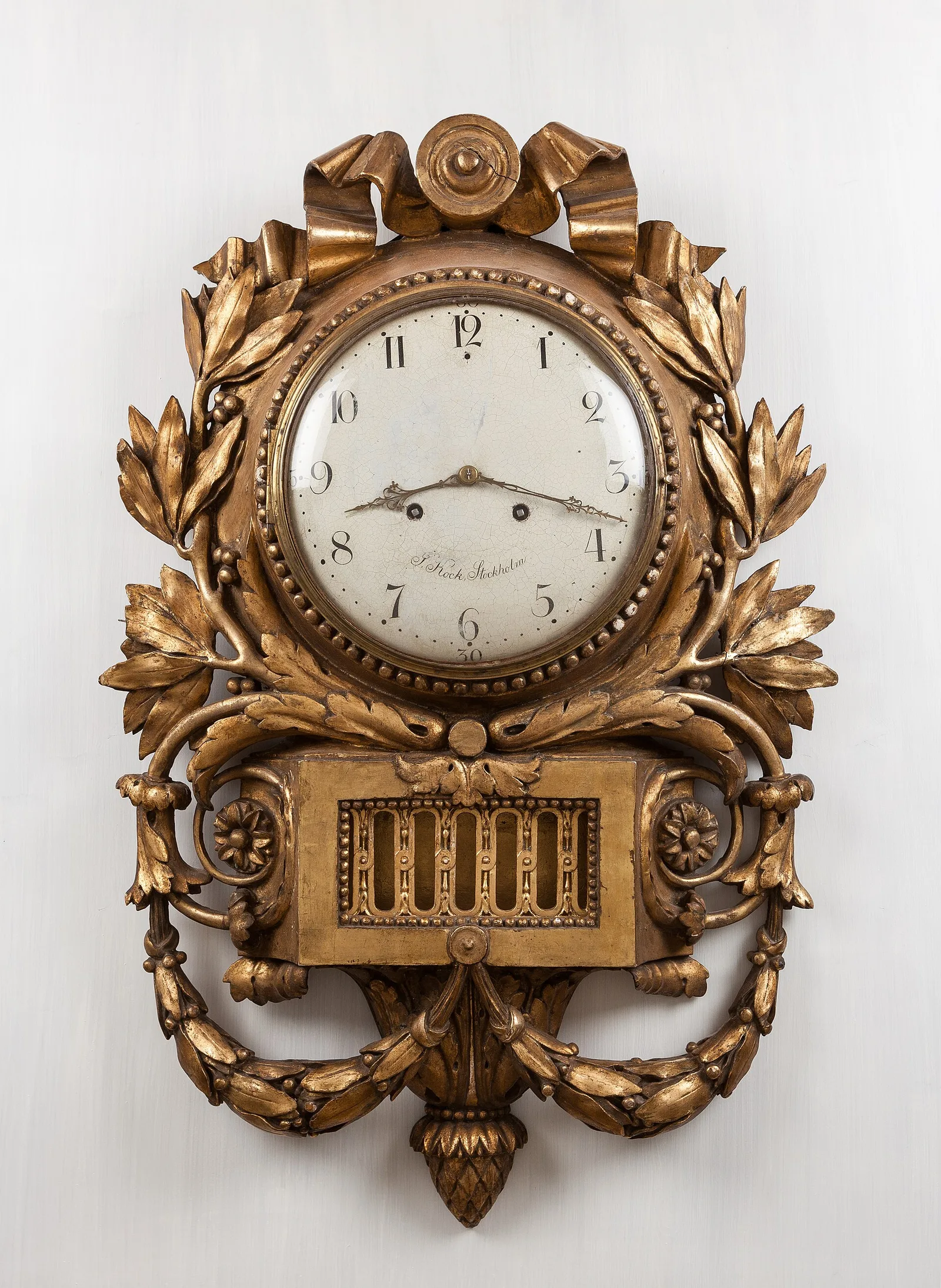
Key facts
- Key part: the escapement arrests and releases the drive wheel in equal beats — the device that turns falling weight into steady time.
- Su Song's tower stood about ten metres high, ran on water or, in freezing winters, liquid mercury, and carried a rotating armillary sphere.
- Survivor: the oldest surviving mechanical clock that strikes the hours still hangs in Salisbury Cathedral.
- Purpose: early mechanical clocks were built for two things — public signalling, and modeling the Solar System for astronomical study.
In depth
Origins and preconditions
The mechanical clock's enabling idea is the escapement: a mechanism that takes continuous power — falling water or falling weight — and releases it in equal, countable beats. That device appears first in Tang China, where the Buddhist monk Yi Xing and the official Liang Lingzan made the world's first clockwork escapement in 723 (or 725), driving a water-powered armillary sphere and clock drive. Zhang Sixun replaced water with mercury in 976, and the Song polymath Su Song incorporated the lineage into his astronomical clock tower at Kaifeng — a machine that, in the article's phrase, united the clepsydra and the mechanical clock into one device run by mechanics and hydraulics. Europe's own leap came between 1280 and 1320, when falling weights replaced fluid power and the verge escapement defined the true mechanical clock.
The clock's prehistory is the water clock, and the water clock's weakness is the reason the mechanical clock matters. Clepsydrae measured time by the flow of water, but flow changes with temperature, pressure and sediment, and a large water clock needed constant attention. The escapement solved a different problem: it turned a continuous fall into discrete beats, making time countable rather than merely visible. The Chinese lineage from Yi Xing to Su Song and the European line from the verge escapement to the pendulum are two answers to the same question — how to make a machine keep a promise that the sky keeps only approximately.
How it worked
A mechanical clock is a chain of three problems solved in series. Power: a weight on a rope (later a coiled spring) wants to fall; the clock stores that desire. Control: the escapement — verge, then anchor, later pendulum-regulated — takes one tooth's worth of power per oscillation and lets the rest go as friction, which is why a clock can divide a day into equal parts without a single human hand. Display: gear trains translate the beat into hands, dials and striking; Su Song's driving wheel alone was eleven feet across with thirty-six scoops, and Dondi's seven-sided machine showed the planets, a calendar of feasts and an eclipse hand rotating every eighteen years. Accuracy was the last frontier: spring drives made clocks portable, and the pendulum finally made them trustworthy.
Every mechanical clock is a negotiation between power and regulation. The weight or spring supplies a constant push; the escapement releases it one tooth at a time, and the oscillator — foliot, pendulum, balance wheel — decides how long each release lasts. The gear train then counts releases and displays them. Accuracy depends on the oscillator's period, which is why the pendulum was revolutionary: a pendulum's period depends on its length and gravity, not on the driving force, so a well-made clock could keep time to seconds a day instead of minutes. The marine chronometer later solved the same problem at sea, where a pendulum cannot hang, by pairing a balance spring with a temperature-compensated escapement.
Diffusion
Clockwork travelled on three routes. Within China, Su Song's tower was the monumental heir to Yi Xing's escapement. Westward, the article reads the Chinese escapement as a source for Western escapement technology, with knowledge of mercury-driven designs possibly spreading through translations of Arabic and Spanish texts — al-Jazari's elephant, scribe and castle clocks at the Artuqid court show the craft at full display. In Europe, the record thickens quickly: Sens Cathedral installs an 'horologe' in 1176, the word clock (bell) supplants horologe as striking becomes the point, references surge between 1280 and 1320, and masterworks by Richard of Wallingford and Giovanni de Dondi follow within a generation. The Salisbury Cathedral clock of 1386 still strikes — the oldest surviving.
Clockwork spread from the tower to the town to the pocket. The first European turret clocks were civic and monastic instruments, striking the hours for a whole community; by the fourteenth century they were status symbols for cities and princes. The Ottoman and Mughal courts acquired European clocks as gifts and curiosities, and Jesuit missionaries carried clockwork into Ming and Qing China, where it became a court fascination. The portable watch, enabled by the mainspring, moved timekeeping onto the body; the factory system then moved it into every workplace. The clock's diffusion is thus also the diffusion of a social discipline — the shared hour — which is why it is often called the first machine of the industrial age.
Impact and legacy
The mechanical clock changed what time felt like. Public striking gave towns a shared hour; labour, prayer and commerce aligned to a machine instead of the sun, and historians have long read the clock as a precondition of disciplined, industrial society. As an astronomical machine it trained Europe's mechanistic imagination — Dondi's clock was the Solar System in brass. As an instrument it answered the sea: navigation's demand for precise timekeeping drove the accuracy race that produced the pendulum and, later, the marine chronometer. Its displacement is equally telling — electric, electronic and quartz timekeeping made the mechanism unnecessary, yet mechanical watchmaking survives as craft and luxury precisely because the escapement, once the world's most consequential device, became its most visible machine jewel.
The clock changed the texture of time before it changed its measurement. Public striking gave towns a shared hour; monastic and later industrial schedules aligned labour to a machine; standard time and the railway timetable then nationalized the hour, and the time zone became a political artifact. The clock also trained a mechanistic imagination: the universe as a clockwork was the governing metaphor of the Scientific Revolution, and Dondi's astronomical clock was that metaphor in brass. Electric, quartz and atomic clocks have since displaced the escapement as the precision standard, but the mechanical clock survives as craft, luxury and a reminder that a machine can organize a society as effectively as it measures a day.
Timeline
- 725–1200
Hydraulic clockwork in China
From Yi Xing's escapement to Su Song's tower, Chinese clockwork runs on water and mercury; Al-Jazari's grand clocks carry escapement craft westward.
- 725Yi Xing's water-driven escapement runs the first clockwork
- 1088Su Song's astronomical clock tower rises at Kaifeng
- 1200–1656
Verge escapement and falling weights
Europe's 1280–1320 surge produces the weight-driven verge clock: public striking, astronomical masterworks, then spring-driven portability in the fifteenth century.
- 1300The verge escapement defines Europe's true mechanical clocks
- 1656–1840
Pendulum, electricity, quartz
Huygens's pendulum answers navigation's demand for precise time; the electric clock is patented, and electronic timekeeping eventually displaces the mechanism.
- 1656Huygens's pendulum clock transforms accuracy
- 1840The electric clock is patented; electronic timekeeping follows
The last phase ends at its data cut-off; the entity window remains open to the present.
Connections
Related technologies
Related entries chosen for this kind of subject — shared context, place or period.
Sources
- Clock — Encyclopaedia BritannicaAttribution
- ClockWikipedia (EN)CC-BY-SA-4.0
- Su SongWikipedia (EN)CC-BY-SA-4.0
- Wikidata Q376 — ClockWikidata · structured dataCC0-1.0
Reuse this data: open dataset (GeoJSON / CSV, CC BY 4.0)